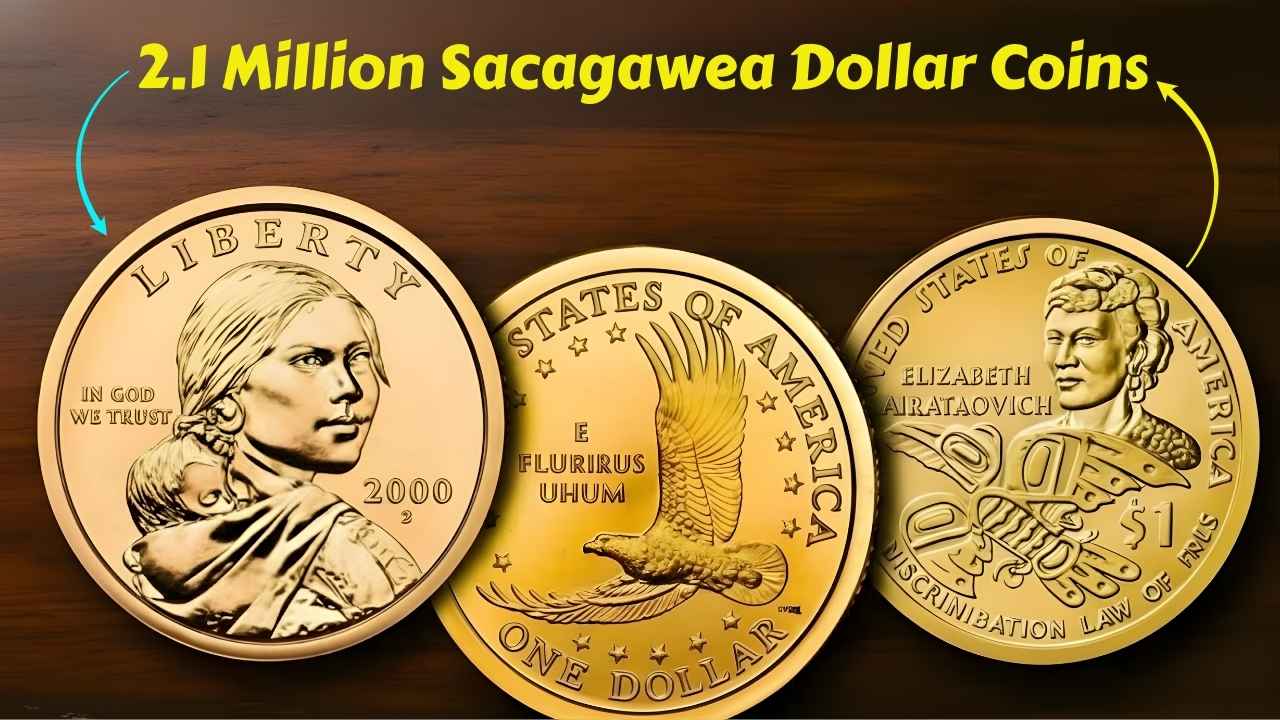
The Sacagawea dollar has been one of the most recognized coins in modern U.S. currency since its introduction in 2000. Featuring the iconic image of Sacagawea, the Shoshone woman who assisted the Lewis and Clark expedition, these coins are notable for their golden color and unique design. While most Sacagawea dollars are common and circulate widely, certain editions, including those with a mintage of only 2.1 million, are highly sought after by collectors. Understanding how to identify these rare coins is essential for anyone looking to invest in or expand their numismatic collection.
History of the Sacagawea Dollar
The Sacagawea dollar was introduced to replace the unpopular Susan B. Anthony dollar. Struck from a copper core clad with manganese brass, its distinct golden hue set it apart from other circulating coins. The obverse depicts Sacagawea carrying her infant son, Jean Baptiste, while the reverse, designed by Glenna Goodacre, features an eagle in flight.
These coins were produced not only for general circulation but also in proof and uncirculated collector sets. While the majority of coins were minted in large quantities, certain limited editions, such as the 2.1 million mintage, are considered rare and have become highly valuable over time.
The 2.1 Million Sacagawea Dollar
Among Sacagawea dollars, coins with a mintage of only 2.1 million are particularly notable. These coins were often part of special mint sets or produced at specific mints with low output. Their rarity makes them highly desirable to collectors, as they are much less common than the standard circulation issues.
The limited number of these coins, combined with their historical significance and unique design, has contributed to their increasing value in the collector market. Coins in pristine, uncirculated condition are especially valuable, often fetching a significant premium above their face value.
How to Identify Rare Sacagawea Dollars
Identifying a rare Sacagawea dollar requires careful attention to detail. First, examine the mint mark and year of production. Coins with a 2.1 million mintage often come from a specific mint, such as the West Point Mint, which produced a smaller number of coins compared to the Philadelphia or Denver mints. The mint mark is usually located on the obverse near Sacagawea’s shoulder.
Next, inspect the condition of the coin. Uncirculated coins with strong luster, sharp details, and no signs of wear are the most valuable. Coins with scratches, discoloration, or other imperfections may have reduced value. Collectors often use magnification tools to examine the finer details, such as the lettering, date, and relief on the coin.
Finally, check for any unique variations or errors, such as doubled dies or off-center strikes. These anomalies are rare and can further increase the coin’s value, making it an exciting find for collectors.

Why These Coins Are Valuable
The 2.1 million Sacagawea dollar coins are valuable for several reasons. First, their low mintage makes them scarce compared to standard circulating coins. Scarcity is a key factor in numismatics, as collectors are willing to pay a premium for coins that are hard to find.
Second, the coins’ historical and cultural significance adds to their value. Sacagawea is an important figure in American history, and her image on a circulating coin makes it highly collectible. Finally, coins that are well-preserved, with original luster and no circulation wear, are especially prized by collectors and investors.
Tips for Collectors in 2026
For collectors looking to acquire rare Sacagawea dollars in 2026, there are several tips to keep in mind. Always check the mint mark and production numbers to ensure the coin is from a limited edition. Look for coins in uncirculated or proof condition, as these are the most valuable.
Proper storage is crucial to maintain a coin’s condition and value. Using coin holders, albums, or airtight containers can prevent damage and preserve the original appearance. Staying informed about current market trends, recent auction results, and numismatic news can also help collectors make informed decisions when buying or selling rare coins.
Finally, networking with other collectors and joining coin clubs can provide valuable insights and access to rare coins that may not be available through standard retail channels.
Key Highlights
- The Sacagawea dollar was introduced in 2000 to replace the Susan B. Anthony dollar.
- Coins with a mintage of 2.1 million are rare and highly sought after by collectors.
- Identifying these coins requires checking the mint mark, year, and condition.
- Well-preserved uncirculated coins are the most valuable.
- Staying informed on market trends and proper storage is essential for collectors.
Final Words
The 2.1 million Sacagawea dollar coins represent a unique opportunity for collectors and investors alike. Their rarity, combined with historical significance and excellent design, makes them an essential addition to any collection. By carefully examining mint marks, condition, and unique variations, collectors in 2026 can identify valuable coins that may not be immediately obvious in circulation or collections. Whether you are a seasoned numismatist or a casual coin enthusiast, understanding and acquiring these rare Sacagawea dollars can be both rewarding and profitable.
