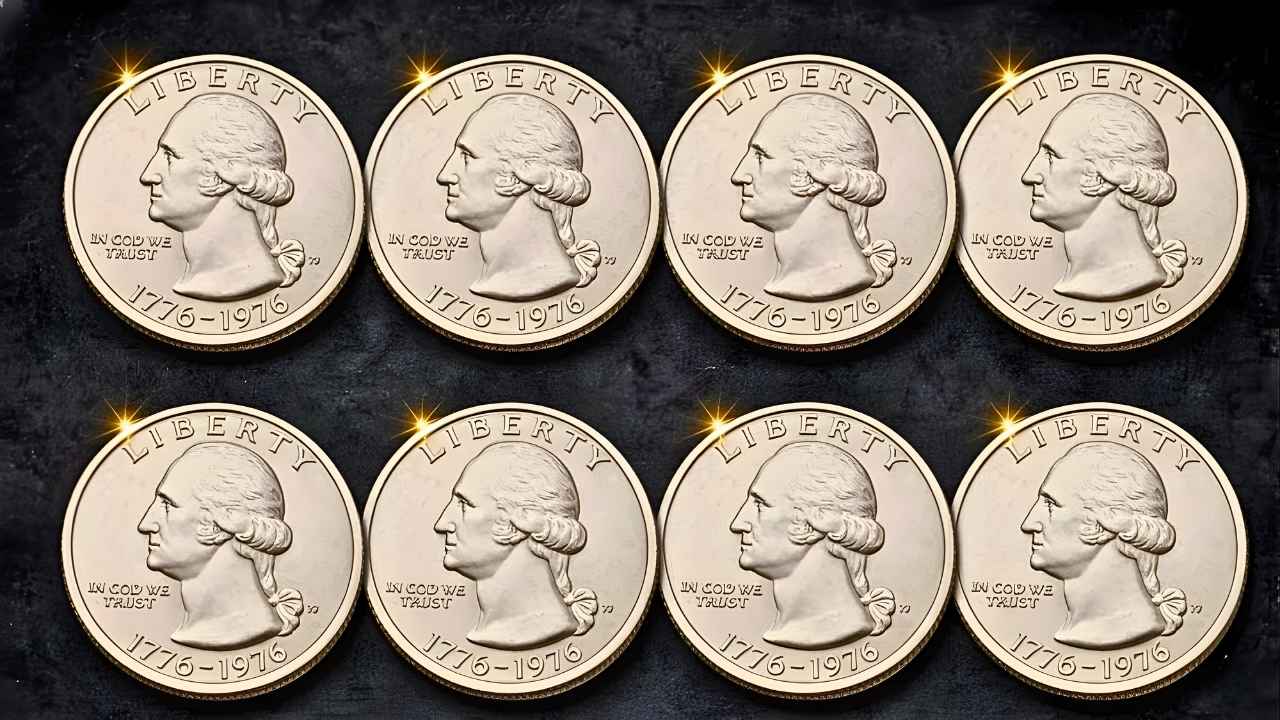
The Bicentennial quarter, issued in 1975 and 1976 to commemorate the 200th anniversary of the United States, is one of the most iconic coins in American history. Featuring the dual date 1776–1976 and the unique design of a colonial drummer on the reverse, these coins were produced in vast quantities for circulation. Despite this, there are rare variations of Bicentennial quarters that have gained immense value over time. Some of these coins are so rare that experts claim they could be worth as much as $270 million each, making them a fascinating find for collectors and everyday coin holders alike.
History of the Bicentennial Quarter
The Bicentennial quarter was introduced as part of a special series to celebrate America’s 200th birthday. Designed by Jack L. Ahr and John Flanagan, the reverse of the coin depicts a colonial drummer, symbolizing the fight for independence, while the obverse retains the familiar profile of George Washington. Unlike typical coins, all Bicentennial quarters carry the dual date 1776–1976, regardless of their actual year of minting.
These quarters were minted in unprecedented numbers to meet the high demand, with billions of coins released into circulation. Despite the large production, certain minting errors, limited uncirculated coins, and special proof editions have become extremely rare and highly collectible today.
The Rare Quarters Worth $270 Million
Among the vast number of Bicentennial quarters produced, only a few are considered truly rare. The coins valued at $270 million are believed to be unique error or special minting variations that are no longer in circulation. These quarters may include misstrikes, double dies, or coins with unique minting anomalies that make them one-of-a-kind.
Collectors are particularly interested in coins that were struck on experimental planchets or those that contain production mistakes that were later corrected by the U.S. Mint. These rare variations can significantly increase a coin’s value compared to standard Bicentennial quarters, making them some of the most coveted pieces for numismatists.
How to Identify Valuable Bicentennial Quarters
Identifying a rare Bicentennial quarter involves examining several key factors. First, check the coin’s mint mark, which indicates where it was produced. Coins from the San Francisco mint, especially in proof or uncirculated sets, are often rarer than those from Philadelphia or Denver. Second, inspect the coin for any anomalies, such as doubling of the design, misaligned edges, or unusual colorations that differ from standard issues.
Condition is also critical in determining value. Coins in pristine, uncirculated condition with sharp details are far more valuable than those that have been circulated extensively. Using a magnifying glass or jeweler’s loupe can help collectors detect subtle errors or irregularities that are not immediately visible to the naked eye.
Why These Coins Are So Valuable
The immense value of certain Bicentennial quarters stems from a combination of rarity, historical significance, and collector demand. Coins that feature unique errors or were produced in extremely limited quantities attract significant attention in the numismatic market. As a result, collectors and investors are willing to pay extraordinary amounts for these coins.
The $270 million valuation, while staggering, reflects the historical importance and scarcity of these quarters. Unlike common coins that circulate daily, these rare pieces are often preserved in collections or discovered unexpectedly, adding to their mystique and desirability. The story behind each coin, especially those with unusual production circumstances, also contributes to their high market value.
Tips for Collectors in 2026
For collectors interested in Bicentennial quarters in 2026, it is important to focus on coins with rare minting variations or unique errors. Start by examining older coin rolls, inherited collections, or proof sets purchased directly from the U.S. Mint. Always verify the coin’s condition and authenticity using professional grading services.
Proper storage is essential to preserve a coin’s value. Using coin holders, albums, or airtight containers can prevent scratches, tarnish, and other damage. Staying informed about auction results, market trends, and numismatic news can also help collectors identify valuable coins before they become widely recognized. Networking with experienced collectors and attending coin shows are additional ways to gain insights into rare finds.
Key Highlights
- The Bicentennial quarter was issued in 1975–1976 to celebrate the United States’ 200th anniversary.
- Certain rare variations, including errors and experimental strikes, are valued at up to $270 million each.
- Identifying valuable coins involves checking mint marks, condition, and any unusual minting anomalies.
- Coins in uncirculated or proof condition are far more valuable than those in circulation.
- Proper storage, authentication, and staying informed on market trends are essential for collectors.
Final Words
The Bicentennial quarter is more than just a piece of currency; it is a symbol of American history and a treasure trove for collectors. While most of these coins are common and widely circulated, rare variations can fetch extraordinary sums and are highly sought after by numismatists. Understanding how to identify rare coins, examining their condition, and recognizing minting errors can help collectors uncover truly remarkable pieces. Whether you are a seasoned collector or a casual enthusiast, the possibility that a Bicentennial quarter worth millions could be hiding in your change adds an exciting element to coin collecting in 2026.