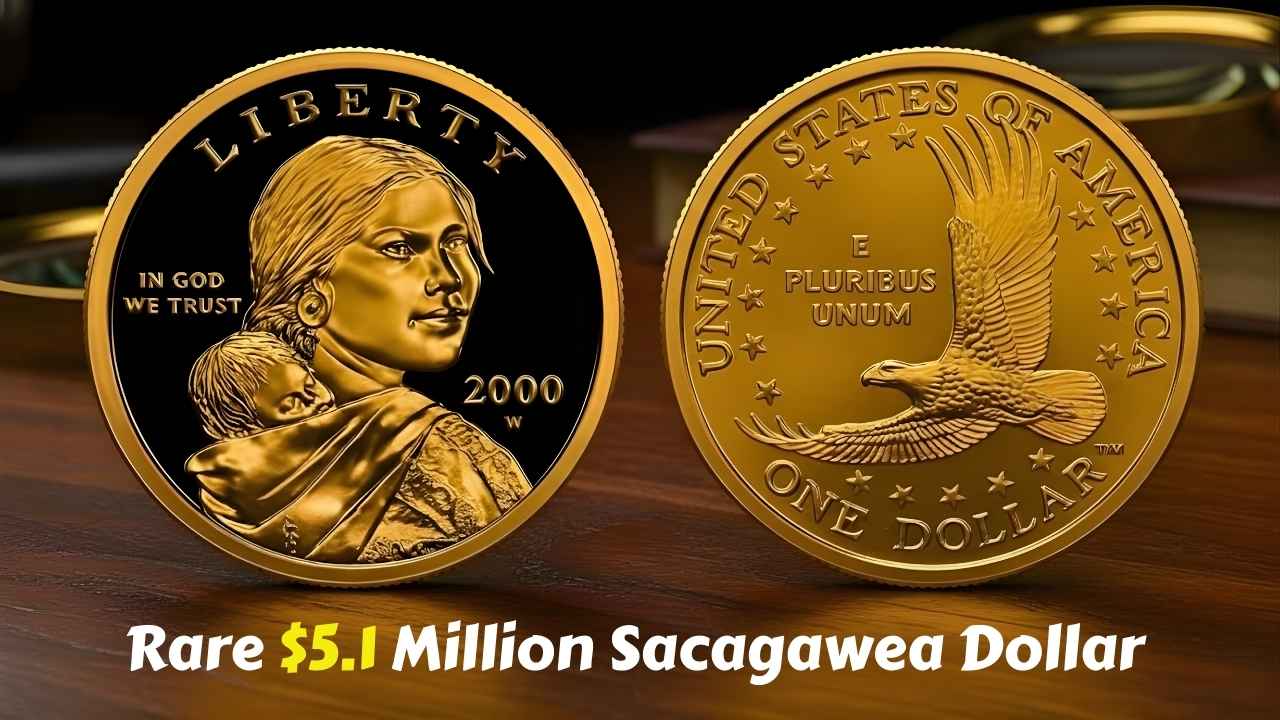
The Sacagawea dollar, first minted in 2000, quickly became a standout in American coinage. Celebrating Sacagawea, the Shoshone woman who guided the Lewis and Clark expedition, these coins are distinctive for their golden hue and unique design. While most Sacagawea dollars are widely circulated and worth only their face value, certain rare editions have skyrocketed in value. One particular coin is estimated to be worth $5.1 million, making it one of the most sought-after pieces for collectors. Understanding how to identify this coin is essential for both seasoned numismatists and casual enthusiasts.
History of the Sacagawea Dollar
The Sacagawea dollar replaced the Susan B. Anthony dollar, which proved unpopular with the public. Produced with a copper core and clad in manganese brass, the coin’s golden color set it apart from other circulating coins. The obverse features Sacagawea carrying her infant son, Jean Baptiste, while the reverse originally displayed an eagle in flight, symbolizing liberty and progress.
The U.S. Mint also issued Sacagawea dollars in uncirculated and proof sets for collectors, separate from general circulation. Over the years, certain production anomalies and limited mintage coins have become particularly valuable. These coins are rare examples of modern U.S. currency commanding extraordinary attention in the numismatic market.
The $5.1 Million Sacagawea Dollar
Among all Sacagawea dollars, the $5.1 million coin stands out because of its extreme rarity. This particular coin is believed to have been minted in very limited numbers, possibly from a special collector set or an experimental minting run. Its value is not only due to scarcity but also because of unique features or errors that differentiate it from standard circulation coins.

Collectors are drawn to this coin because it represents a modern example of how errors, limited production, and historical significance can create incredible value. Coins like these rarely appear on the market, which contributes to their staggering worth. Even a single discovery can make headlines in the numismatic community.
How to Identify a Valuable Sacagawea Dollar
Identifying a high-value Sacagawea dollar requires attention to detail and knowledge of specific features. The first step is to check the mint mark and year of production. Rare coins often come from mints that produce fewer coins, such as the West Point Mint, which released smaller quantities compared to Philadelphia or Denver.
Next, examine the coin’s condition. Uncirculated coins with original luster, sharp details, and no signs of wear are significantly more valuable. Collectors should also look for minting anomalies, such as doubled dies, off-center strikes, or unusual planchet characteristics. These rare features are often the difference between a standard coin and one worth millions.
Professional grading and authentication are also recommended for coins believed to be extremely rare. Certification not only confirms authenticity but also helps establish market value, which is crucial for high-priced coins like the $5.1 million Sacagawea dollar.
Why Some Sacagawea Dollars Are Worth Millions
The $5.1 million valuation for this Sacagawea dollar reflects a combination of scarcity, historical importance, and collector demand. Limited mintage makes the coin extremely rare, while its design and connection to American history enhance its desirability. Coins with minting errors or unique production traits often attract even greater attention, as collectors seek items that are both unusual and historically significant.
Market trends also play a role. Coins that are highly publicized, featured in auctions, or previously owned by notable collectors can appreciate substantially in value. For the $5.1 million Sacagawea dollar, its rarity and provenance have combined to create a coin of immense interest and worth.
Tips for Collectors in 2026
Collectors interested in Sacagawea dollars in 2026 should approach the market with both caution and knowledge. Always examine the mint mark, year, and condition of the coin. Look for signs of rarity or unique production features that distinguish a coin from standard circulation issues.
Proper storage is essential to maintain the coin’s condition. Coins should be kept in protective holders, albums, or airtight containers to prevent scratches, tarnish, or other damage. Staying informed about auction results, coin shows, and market trends can provide insight into which Sacagawea dollars are in demand and which may hold extraordinary value.
Networking with other collectors and consulting with professional numismatists can also help identify rare coins and verify authenticity. Awareness and research are critical for anyone looking to find a coin with the potential to be worth millions.
Key Highlights
- The Sacagawea dollar was introduced in 2000 and features Sacagawea carrying her infant son.
- Certain rare editions, including the $5.1 million coin, are extremely limited and highly valuable.
- Identifying rare coins requires examining the mint mark, year, condition, and any unique anomalies.
- Coins in uncirculated or proof condition are the most sought after.
- Professional grading, proper storage, and staying informed on market trends are essential for collectors.
Final Words
The $5.1 million Sacagawea dollar represents the intersection of rarity, history, and numismatic intrigue. While most Sacagawea dollars are common, limited editions and coins with unique minting features can reach extraordinary values. By carefully examining mint marks, production details, and coin condition, collectors in 2026 can identify coins of exceptional worth. Whether you are an experienced numismatist or a hobbyist exploring modern coins, understanding and collecting rare Sacagawea dollars offers both financial potential and a connection to American history.
